

The Mirror We’re Building: Why AI’s Golden Age Demands a Reckoning
How artificial intelligence became the most honest reflection of our planetary crisis & what we choose to do about it


We’re living through a peculiar moment in the AI story.
Google is feverishly embedding Gemini into every surface—your TV, your phone, your email—promising “AI utility” that will make us say “Wow, this is truly powerful.” Meanwhile, Equinox just launched a campaign mocking AI deepfakes, Blue Diamond has the Jonas Brothers sarcastically defending real advertising, and luxury brands are racing to assure us they use actual humans in their campaigns.

This isn’t a glitch. It’s a preview of the collision that’s coming. And it’s not just about brands making fun of AI, it’s about society as a whole…
But here’s what nobody in Silicon Valley wants to talk about: AI isn’t just creating a crisis of authenticity. It’s creating a mirror that shows us exactly what we’ve become—an extractive civilization pretending infinite growth on a finite planet is possible.
The question isn’t whether AI will transform everything. It will. The question is what we transform into.

The crossroads we’re actually at
The tension emerging in January 2026 isn’t between skeptics and believers. It’s between two equally valid human needs that are increasingly incompatible: our hunger for authentic connection and meaning, and our entrapment in economic systems that are algorithmically optimizing us toward convenience and efficiency.
The brands launching anti-AI campaigns aren’t rejecting technology. They’re recognizing that in a world drowning in synthetic content, authenticity and presence has become the scarcest resource—and therefore the most valuable marketing position.
This hunger for authenticity will only intensify as AI-generated content becomes indistinguishable from genuine content. As culture gets flooded with “slop,” the premium placed on the real will skyrocket. We’ll see a bifurcation: luxury authenticity for those who can afford it, algorithmic synthesis for everyone else.
But authenticity is the surface symptom. The deeper pathology is material.
The hidden cost nobody mentions
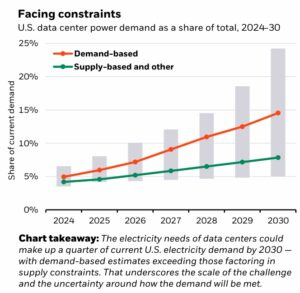
We’re talking about $600 billion in AI infrastructure spending in 2026 alone! That translates to staggering energy consumption. Training large language models requires energy equivalent to powering a small nation. Inference—running these models at scale—multiplies that burden exponentially.
And that energy has to come from somewhere.
Recent research published in Nature Sustainability puts real numbers to this: AI systems could generate carbon emissions between 32.6 and 79.7 million tons of CO2 in 2025—equivalent to the annual footprint of New York City. By decade’s end, U.S. data centers alone could consume as much water as 10 million Americans, with the global water footprint reaching up to 764.6 billion liters. That’s roughly the world’s entire annual consumption of bottled water.
The hyperscalers will point to their renewable energy commitments. They’re investing heavily in solar, wind, and geothermal capacity. But the grid doesn’t work that way. When you dramatically increase energy demand, you create systemic pressure. You pull power from somewhere. You delay the decommissioning of natural gas plants. You slow the transition away from carbon-intensive infrastructure.
More insidiously, the water usage is staggering. By 2030, data centers are projected to consume 1.2 billion cubic meters of water annually—equivalent to a city of 7.5 million people. We’re extracting water from aquifers and water systems already stressed by climate change and agricultural demand. Nearly 45% of existing data centers may face high exposure to water stress by the 2050s. In California, in the Middle East, in already water-scarce regions, AI’s thirst becomes another extractive pressure on systems that can’t take it.
A World Economic Forum analysis warns that climate hazards—extreme heat, drought, and water stress—could drive cumulative annual costs at existing data centers up by $3.3 trillion by 2055. The vicious cycle is clear: as temperatures rise, cooling systems work harder, consuming more water and energy, which drives more emissions, which intensifies climate disruption.
This is the regenerative problem nobody in Silicon Valley wants to talk about: You cannot build infinitely expanding extraction on a finite planet. The laws of thermodynamics don’t care about your venture capital returns.
The economic trap
Here’s where it gets dark: we need these economic systems to function. Our jobs, our livelihoods, our ability to live in the modern world is tied to the machine. Most of us can’t opt out. We can’t choose not to participate in the economic system that demands AI optimization, energy consumption, and efficiency-at-all-costs.
So we become complicit in something we increasingly recognize is broken.
We crave authenticity while living in an economy that rewards synthetic scale. We want real human connection while our attention is commodified by algorithmic feeds. We’re terrified of AI’s environmental footprint while we’re dependent on the very systems driving that consumption.
This cognitive dissonance will drive the resistance we’re about to see. It won’t come from Luddites or technology skeptics. It will come from people like us—deeply embedded in the system, aware of its contradictions, increasingly desperate for an exit that doesn’t exist.
The brands launching anti-AI campaigns understand this. They’re selling us a story we desperately want to believe: that we can have both. That we can participate in the economy AND preserve authenticity. That we can have growth AND sustainability. That we can have infinite AI scaling AND a livable planet.
We can’t.
But here’s what AI could actually be for
AI isn’t inherently extractive. It’s a tool. And like any tool, it amplifies the intention of the person wielding it.
What if we stopped using AI to build widgets and started using it to heal Earth’s living systems? I mean, there’s a good case for it: Natural ecosystems are worth an estimated $125 trillion every year to the global economy.
Because that’s already happening. Just not in the places that make headlines.
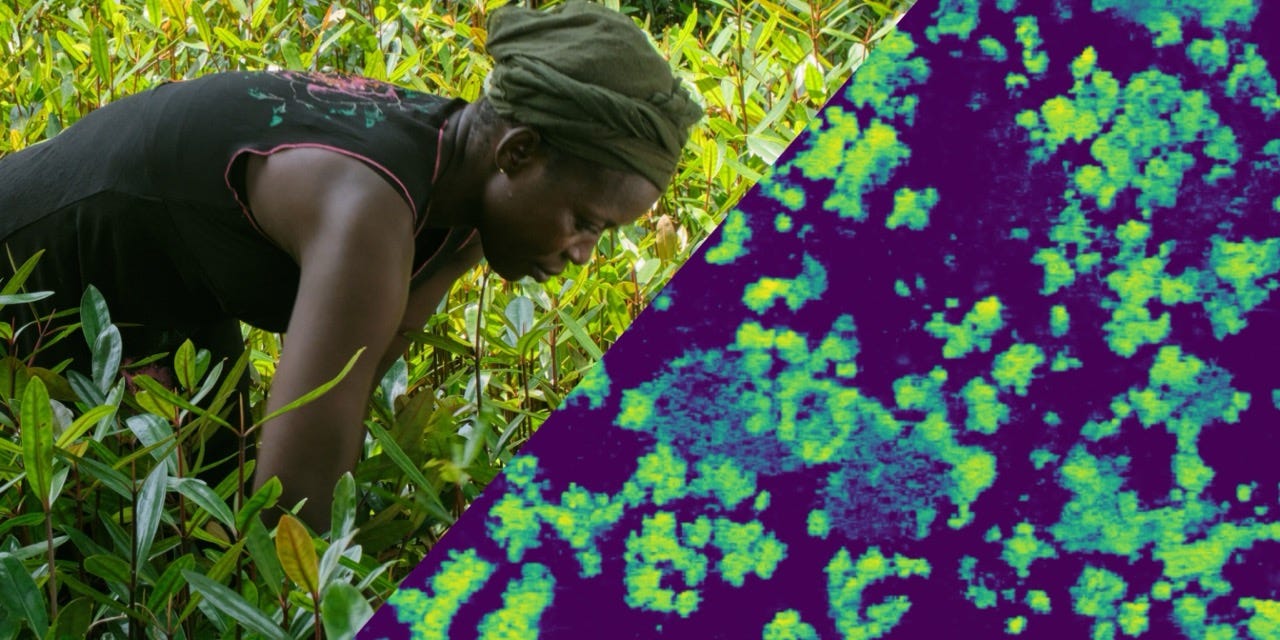
World Resources Institute’s Land & Carbon Lab just achieved something that sounds impossible: they can now count individual trees from satellite imagery with 80% of the accuracy of traditional field methods at just 3% of the cost. Using Meta’s DINOv3 AI model, they can detect saplings as young as 8 months old—trees that were previously invisible to satellite monitoring. They’ve already deployed this across 27 African countries through their TerraFund program, backing nearly 200 restoration projects with $33 million in funding.
This isn’t just efficiency. This is measurement unlocking capital.
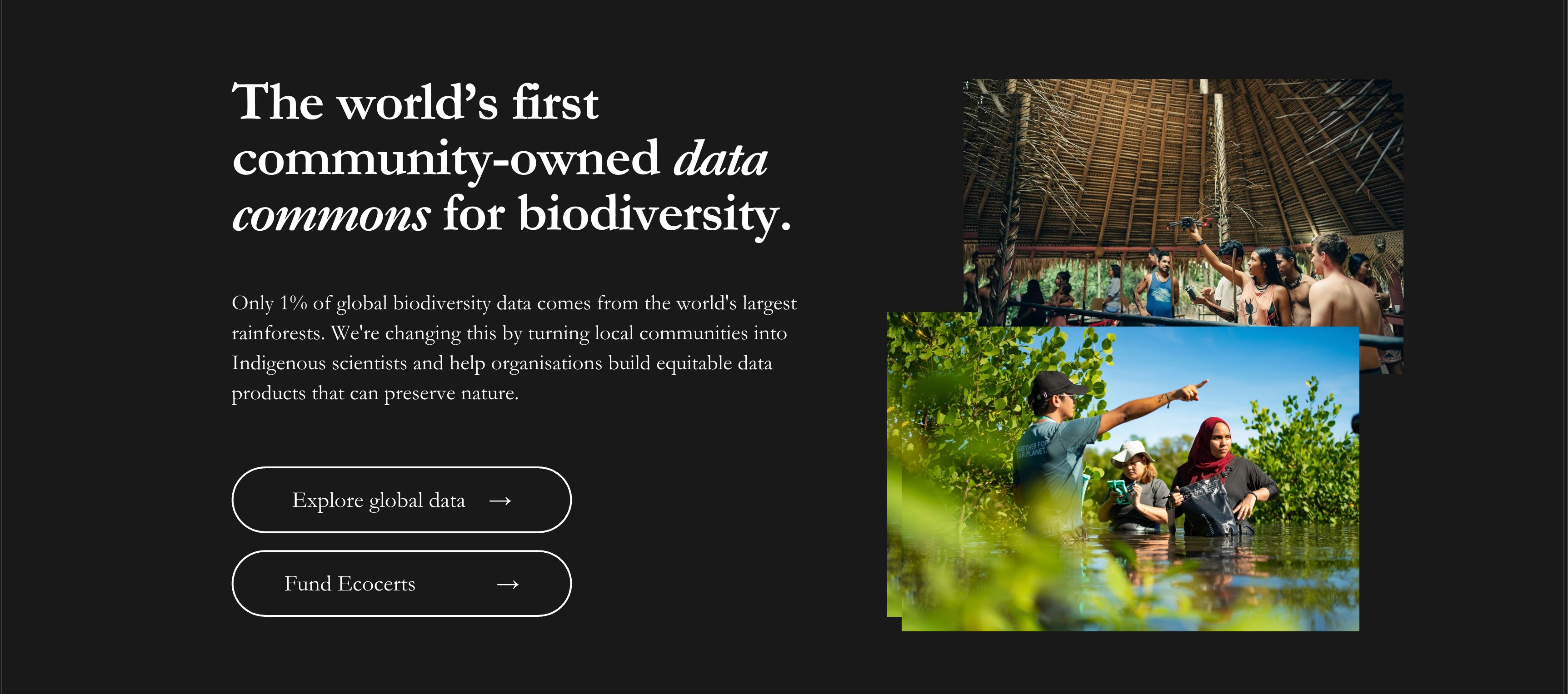
GainForest is taking this further, combining AI video prediction with remote sensing to design payment schemes that flow directly to local communities in Paraguay and the Global South. Instead of centralized institutions controlling nature finance, they’re using AI to verify forest protection and restoration outcomes, then decentralizing the payments to the people actually doing the work.
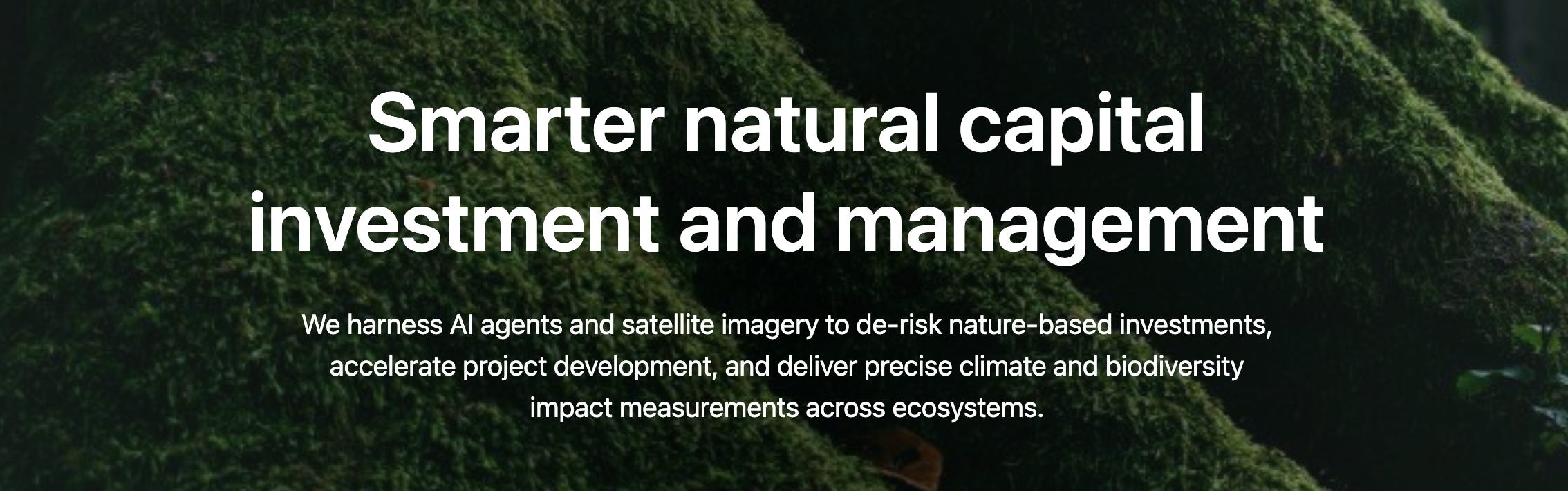
Kanop uses AI agents combining optical, radar, and LiDAR satellite data to de-risk nature-based investments for institutional capital. They’re scaling nature finance by providing the kind of trustworthy measurement and verification that voluntary carbon markets actually require.
In the regenerative agriculture space, the World Economic Forum’s AI for Agriculture Innovation initiative in Telangana, India helped chilli farmers achieve a 21% increase in yields, a 9% reduction in pesticide use, and an $800 income boost per acre—all while building soil organic carbon. AI-enabled soil testing provides rapid assessments that let farmers know within hours whether regenerative practices are working, rather than waiting years for results.

In the oceans, AI is becoming the backbone of marine conservation. Autonomous Underwater Vehicles equipped with AI are discovering new deep-sea species and monitoring ecosystems impacted by seabed mining. AI-driven models predict fish migration patterns in response to warming waters, helping fisheries management protect both marine biodiversity and coastal communities. Satellite monitoring combined with AI-driven vessel tracking is uncovering illegal fishing operations and improving transparency at sea. The High Seas Treaty, which entered into force in January 2026, will rely heavily on AI-powered monitoring to protect 61% of the global ocean.
For forest restoration, companies like MORFO are using AI-powered drones that can plant over 100,000 trees per day while monitoring soil conditions, seedling health, and biodiversity recovery in real-time. Their AI suite can identify tree species and track health as early as six months after planting—something traditional satellite imagery cannot do.
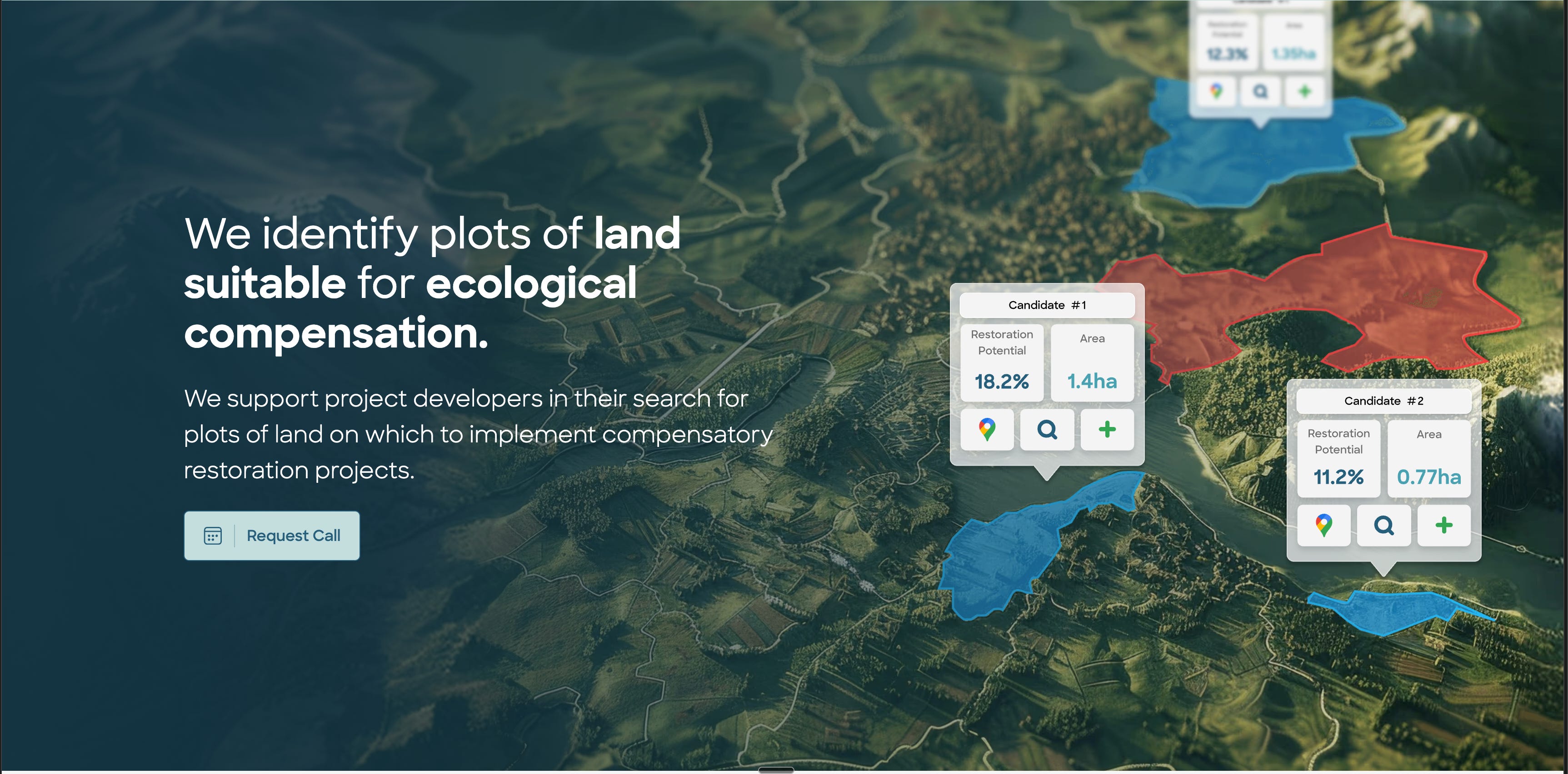
Versant uses satellite remote sensing and species distribution modeling to identify optimal land parcels for restoration projects before a single dollar is invested—predicting which sites will actually succeed rather than funding projects that fail. Mozaic Earth has achieved 30-50% cost reductions in biodiversity monitoring by using smartphones for field data collection combined with remote AI-supported ecologists analyzing the images.
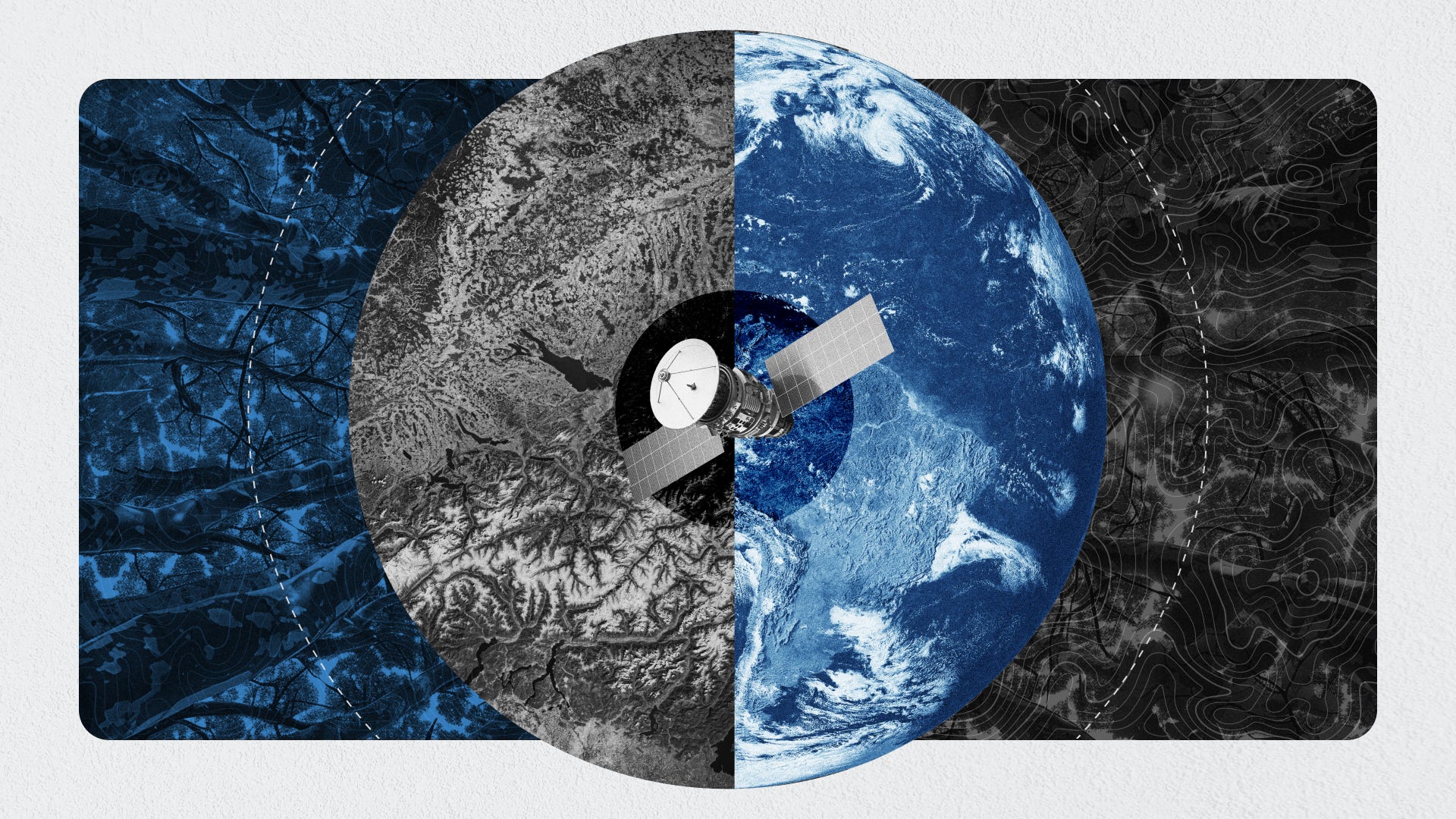
Meta and World Resources Institute recently released a global canopy height map at 1-meter resolution, allowing detection of single trees across the entire planet. This enables transparent monitoring of reforestation projects and helps direct climate finance to efforts that are actually working.
These aren’t feel-good pilot projects. They’re operational systems processing real data, guiding real decisions, and producing measurable ecological outcomes.
The deeper pattern? Measurement unlocking capital. These projects solve the “how do we know this actually worked?” question that’s been blocking private investment in nature-based solutions for decades. The AI doesn’t create the ecological value—it verifies it, which gives financial institutions confidence to deploy capital at scale.
The difference? These applications respect material limits. They’re oriented toward restoration, not extraction. They use AI to understand complex living systems—not to replace them.

What’s coming
The resistance to AI won’t be unified or coherent. It will be messy, cultural, sometimes irrational. And it’s accelerating faster than predicted.
A new report released this week by the Institute and Faculty of Actuaries and University of Exeter—called “Parasol Lost”—warns that global temperatures are rising faster than models predicted. We’re losing the “aerosol cooling” effect that air pollution has been providing, a hidden sunshade offsetting about 0.5°C of warming. As we clean up shipping emissions and industrial pollution, we’re removing this accidental buffer. Without urgent action, we’ll hit 2°C before 2050—decades earlier than expected.
The economic projections have been catastrophically wrong. Previous models estimated climate damages at just 2.1% of global GDP for a 3°C rise. New analysis from the UK’s Climate Financial Risk Forum now suggests a severe combined climate and nature shock could cause a 15-20% contraction in global GDP over five years. That’s not a rounding error. That’s depression-level economic disruption.
The United States experienced 23 billion-dollar climate disasters in 2025, causing over $115 billion in damages. The LA wildfires alone—$61.2 billion—exceeded half the year’s total losses.
This is the context in which we’re building AI infrastructure that will consume as much water as 10 million Americans and generate emissions equivalent to New York City. The collision is coming whether we acknowledge it or not. We’ll see:
Authenticity as status symbol
A return to real human-made goods, real human-created art, real human-conducted services will become luxury markers. The premium for “not AI-generated” will grow exponentially. A ‘no-AI’ social media network. ‘No iPhones’ social clubs.
Regulatory backlash
As the environmental costs become undeniable and the cultural impact becomes visible, governments will start taxing AI infrastructure, restricting data center placement, and regulating energy consumption. This is already beginning in Europe.
Economic bifurcation
Those who can afford to opt out of the AI-optimized experience will. Those who can’t will be subject to increasingly sophisticated algorithmic management. The inequality won’t be about access to AI—it will be about access to the human.
Systemic pressure
The energy and water demands of AI won’t slow down. They’ll create cascading problems in other systems. We’ll see water conflicts, power grid stress, and resource competition intensify. The AI boom will become entwined with climate breakdown in the public consciousness.
The Regenerative opportunity
This is where the hope lives. The systems thinking that drives regenerative work—understanding feedback loops, respecting planetary boundaries, designing for renewal instead of extraction—becomes the actual competitive advantage. The companies and individuals building regenerative infrastructure won’t be niche players. They’ll be building the alternative architecture, like my friend Nicole Reese describes in her hit piece “Build the Village, Starve the Empire”.

The real question
Google’s vision of AI utility is compelling because it’s genuinely useful. But utility in service of what? Convenience? Efficiency? Extraction?
Or could we imagine AI utility oriented toward regeneration—toward building systems that heal instead of harm, that restore instead of deplete, that honor the real material constraints we’re operating within?
When AI analyzes soil microbiome data to guide regenerative farming practices, it’s serving life. When it monitors deep-sea ecosystems to protect them from extractive mining, it’s serving life. When it predicts which native tree species will thrive in changing microclimates to guide reforestation efforts, it’s serving life.
When it generates synthetic content to flood attention markets with algorithmic engagement optimization, it’s serving extraction.
The tool is neutral. The intention isn’t.

The invitation
This isn’t a question Google will answer. It’s a question we have to ask ourselves, in the spaces where we still have autonomy. In the products we build, the content we create, the systems we participate in or resist.
If you’re building with AI, here’s the question worth asking: Does this serve extraction or regeneration? Does it respect material limits or pretend they don’t exist? Does it optimize for attention capture or for actual human and ecological flourishing?
The climate tech space is showing us what’s possible. WRI’s Land & Carbon Lab detecting 8-month-old saplings from space. GainForest decentralizing nature finance payments to indigenous communities. Kanop de-risking institutional investment with verifiable MRV (monitoring, reporting, verification) frameworks. Versant identifying optimal restoration sites before capital is deployed. These aren’t utopian fantasies—they’re working systems, deployed at scale, producing measurable results.
And they’re unlocking finance that’s been stuck for decades. TerraFund’s MRV framework now provides systematic verification across 240+ organizations. When you can prove restoration is working at 3% of the traditional cost, suddenly private capital can move.
The authenticity crisis is real. And it’s only the beginning.
The harder reckoning—about material limits, about energy and water and the actual cost of our digital dreams—that’s still coming. It will be messier, more urgent, and far less photogenic than a Jonas Brothers ad campaign.
We should prepare for it now. Not by rejecting AI, but by asking what it’s actually for. Not by building more sophisticated extraction, but by using the most powerful computational tools humanity has ever created to understand and restore the living systems we depend on.
The mirror is showing us what we’ve become. The question is whether we have the courage to look at it—and change.
If this vision resonates with you, I’d love to hear what you’re building or exploring at the intersection of AI and regeneration. Drop a comment or subscribe to stay connected as we continue building toward a regenerative future.
Peace be with you 🙏